
Trigeminal neuralgia
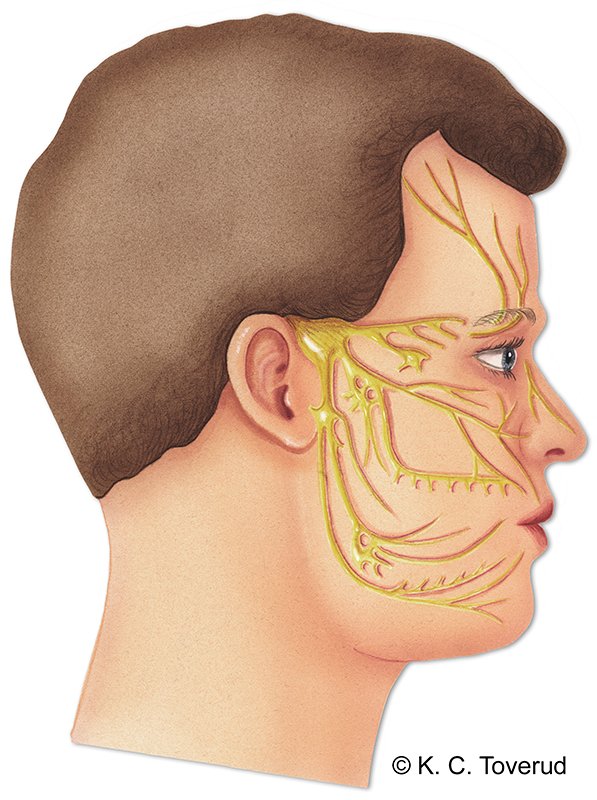
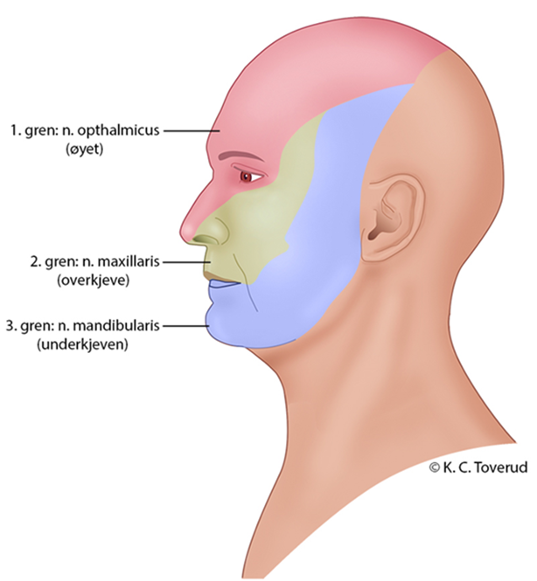
- Neuropathic pain in the innervation area of the N. Trigeminus (N. ophthalmicus, N. maxillaris, N. mandibularis)
- Burning pain with sudden onset that can last for several minutes
- Causes
- Mechanical pressure on the nerve due to aneurysm, tumor, or trauma
- Postherpetic neuralgia
- Dental disease
Sensory nerve from the dorsal ramus of the cervical nerve N. occipitalis major C2-3
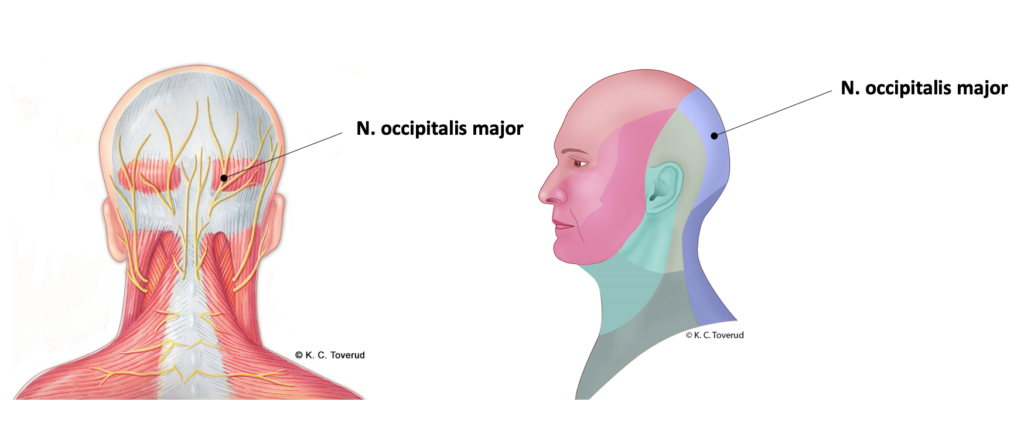
N. occipitalis major neuralgia
- The patient complains of constant discomfort/pressure suboccipitally, with episodic experiences of intense pain radiating to the back of the head in the sensory area of the N. occipitalis major
- The likely mechanism for the pain is nerve compression and subsequent inflammation in the nerve as it passes through the m. semispinalis and/or m. trapezius
- Common symptoms
- Pain on one or both sides of the head
- Pain behind the eyes
- Light sensitivity
- Blurred vision
- Reduced neck mobility
- The likelihood that the condition is present can be strengthened by a positive effect of nerve blockade
- Differential diagnoses are migraine, tension headache, hemicrania (paroxysmal/continuous/treated with indomethacin) and cluster headache (episodic/continuous/treated with triptans)
Blake, P., Burstein, R. Emerging evidence of occipital nerve compression in unremitting head and neck pain.J Headache Pain 20, 76 (2019). https://doi.org/10.1186/s10194-019-1023-y
NevroNEL
National Advisory Unit on Headache (NKH) St. Olavs Hospital
Cervicogenic headache
Pain distribution, often unilateral
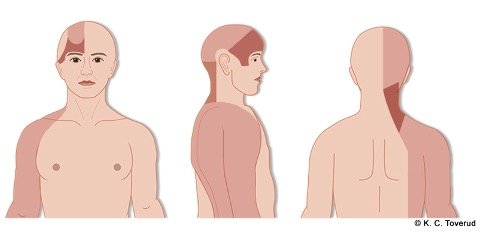
- The following sensory nerves contribute to the pain
- Sensory dorsal cervical nerve roots (N. occipitalis major)
- Sensory nerves from the cervical plexus (N. occipitalis minor, N. auricularis major)
- Point of maximum pain is in the neck (dark shading)
- Referred pain to forehead/temple, as well as down towards the shoulder (light shading)
- Accompanying headache is often unilateral