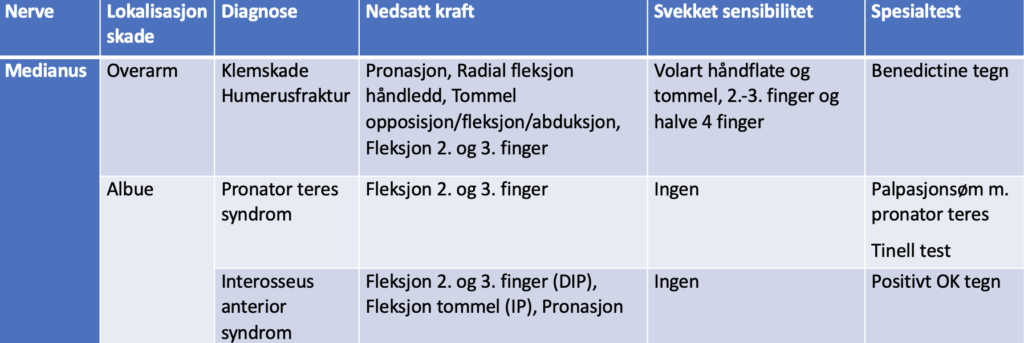
Pronator teres syndrome, anatomy
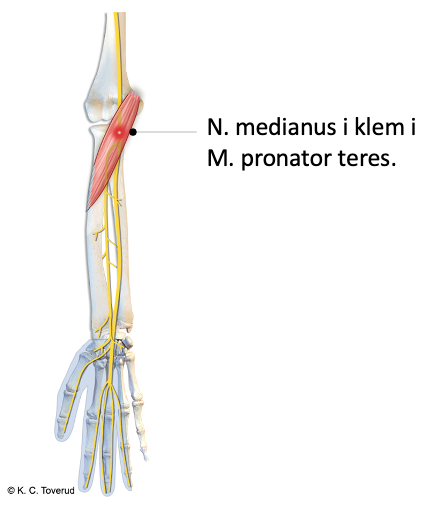
- Is reinforced by repeated movements in the forearm during mechanical work and in some types of sports activities (tennis, rowing, weightlifting).
- Accounts for 10% of cases with compression of the median nerve.
Pronator teres syndrome, clinic
- Symptoms
- Pain and paresthesias in the forearm and hand (median nerve area)
- Findings
- Increased pain with isometric pronation and simultaneous elbow extension
- Tenderness on palpation over the pronator teres muscle 4 cm from the medial humeral epicondyle, causes tingling and paresthesias in the median nerve area within 30 seconds of compression
- Weakness for grip and pinch grip, clumsy
- Tinel sign over M. pronator teres positive
- Age and gender
- Usually onset around 50 years of age
- Four times more common in women
- The condition is associated with diabetes, alcoholism, and hypothyroidism
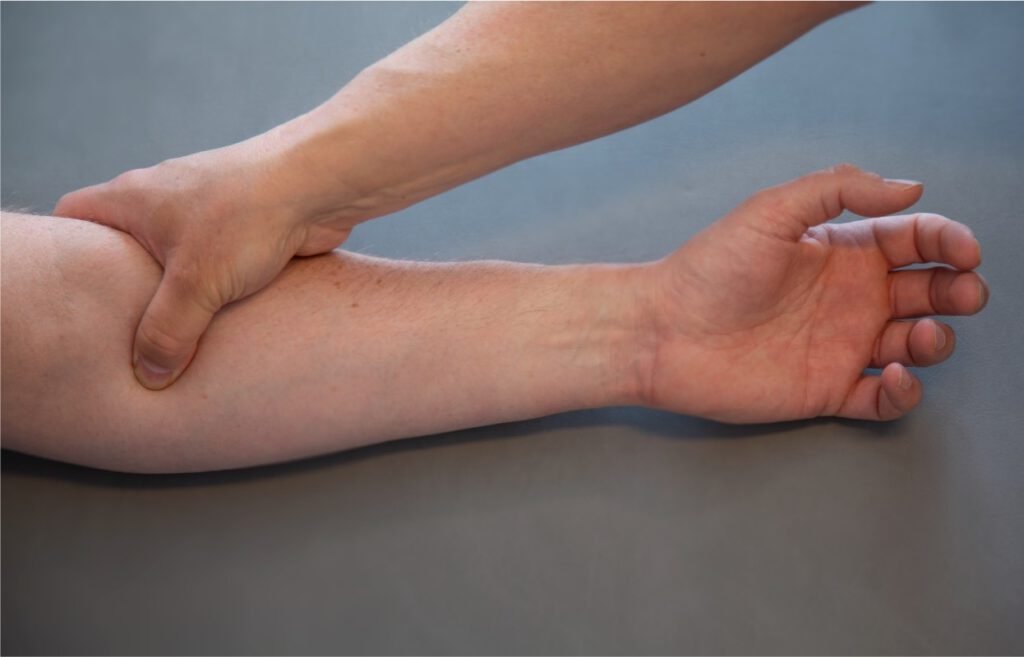
M. pronator teres syndrome, compression test
Hand compression neuropathy: An assessment guide
J Fam Pract. 2016 July;65(7):462-464,466-471
- Tenderness with compression over the pronator teres muscle 4 cm distal to the medial epicondyle
- Causes tingling and paresthesia in the median nerve area after 30 seconds of compression against the muscle
Key diagnostics, N. medianus