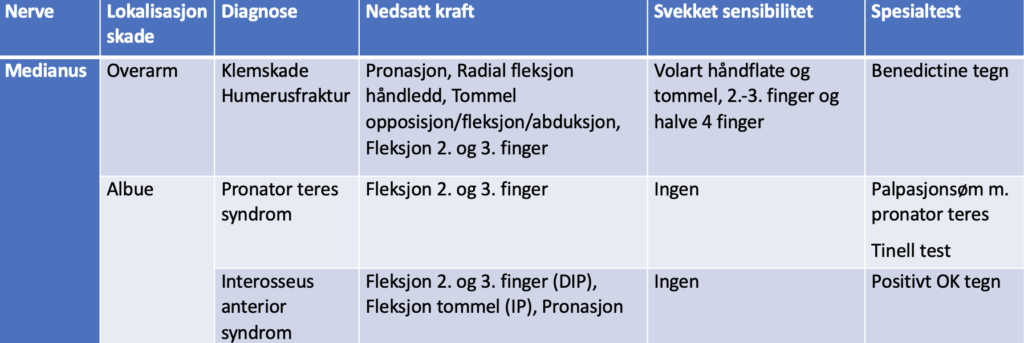
Anterior interosseous nerve syndrome, anatomy
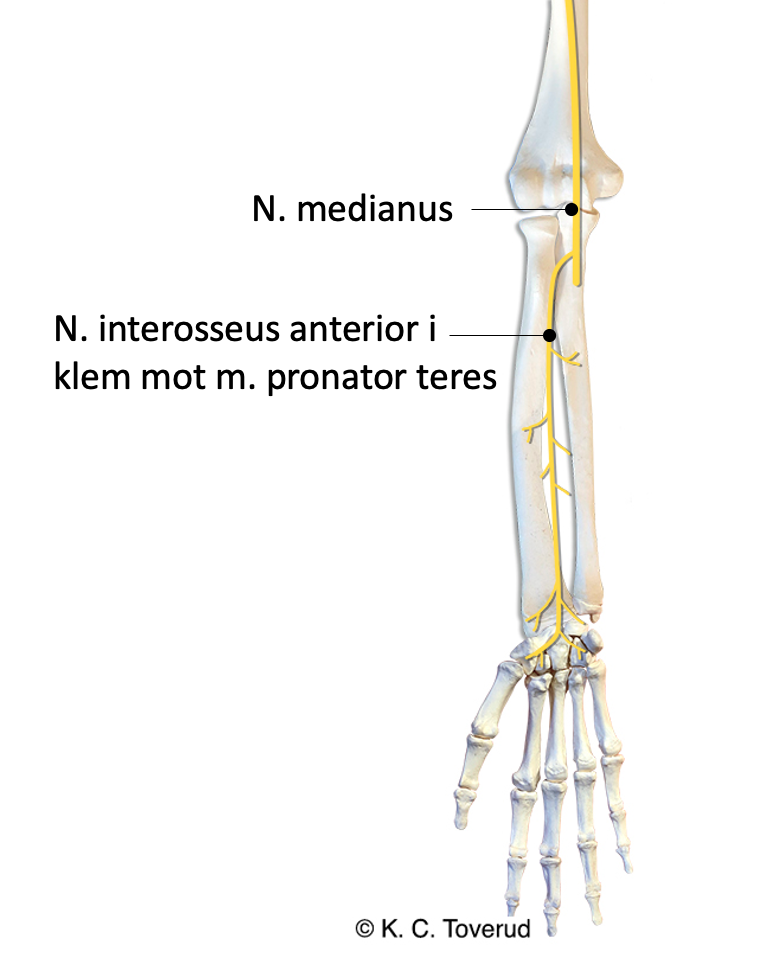
- Pure motor branch of the median nerve to
- Flexor digitorum profundus muscle (2nd and 3rd finger)
- M. flexor pollicis longus
- M. pronator quadratus
- Causes weakness in the M. flexor digitorum profundus to the 2nd and 3rd finger (DIP joint) and weakness in the M. flexor pollicis longus (interphalangeal joint)
- Also causes weakness in the M. pronator quadratus
- No sensory loss or pain
N. interosseus anterior syndrome, clinical
- Rare nerve injury that can be seen with neuritis, fracture in the forearm, and with pressure on the nerve in M. pronator teres
- Accounts for 1% of cases with compression of the median nerve.
- The diagnosis is made by neurography.
- Large tendency for spontaneous improvement of motor functions 6-8 weeks after injury, rarely the nerve is torn and permanently damaged.
Anterior interosseous nerve syndrome, positive OK sign
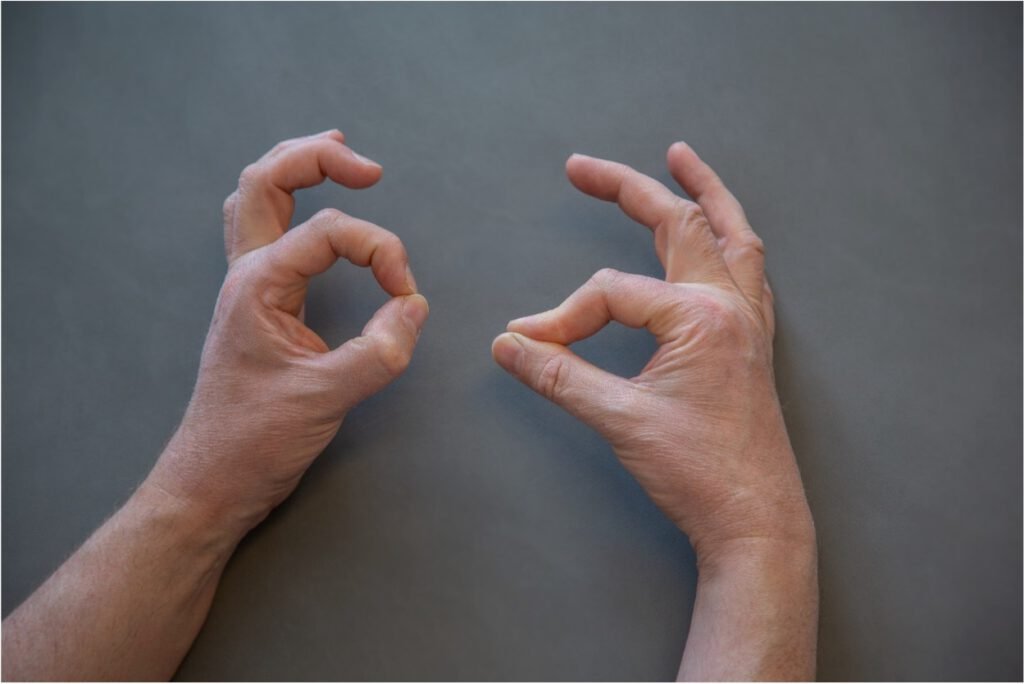
- Positive OK sign, i.e., the distal phalanx of the index finger and thumb cannot flex and make an O
- Reduced ability for pincer grip causes problems with weakness and clumsiness in grasping objects with the thumb, index, and middle finger, for example lifting a cup
Key diagnostics, N. medianus